Most marketing starts in the same place. Not with the product, but with the problem.
It is the gym ad that reminds you your jeans don’t fit. The accounting software that asks how many weekends you’ve lost to spreadsheets. The dentist warning that today’s small cavity becomes tomorrow’s root canal.
Sometimes it is subtle. Sometimes it’s over the top and a little manipulative. And sometimes it’s a bloke dressed as Darth Vader breathing through a CPAP machine (more on that later).
Pain point messaging has been around for as long as advertising itself. Long before marketers started giving everything an acronym, advertisers understood a simple truth. People are usually more motivated to avoid pain than to chase pleasure. Psychologists call this loss aversion, famously summarised by Daniel Kahneman and Amos Tversky: “losses loom larger than gains.”
Behavioural economists gave it a name. Copywriters just put it in the headline.
Like any powerful tool, though, context decides everything.
From soap sales to software subscriptions
Early direct response advertisers built entire careers on a single sequence. Identify a problem, make the reader feel it, deepen that feeling, then present the solution. It became one of copywriting’s most enduring formulas: PAS.
Problem. Agitate. Solution.
It is beautifully simple.
Identify a problem your audience already has. Show why it matters and what happens if nothing changes. Offer a believable solution.
PAS has survived for decades because it mirrors how people actually make decisions. We notice discomfort first. Then we look for relief. Where marketers go wrong is assuming the middle step demands emotional whiplash. It doesn’t.
Pain doesn’t always have to hurt
One of the biggest misconceptions about pain point messaging is that it has to be serious.
It doesn’t.
The emotion should fit the brand, the audience and, most importantly, the problem you are solving. Sometimes that means being empathetic and sincere. Sometimes it means creating urgency. And sometimes it means making people smile because you understand exactly what they’re frustrated by.
Take Snickers’ “You’re Not You When You’re Hungry” campaign. The pain point isn’t hunger. It’s the social awkwardness of becoming irritable and impossible to be around. The ads exaggerate that frustration into comedy, making the problem memorable without making the audience feel judged.
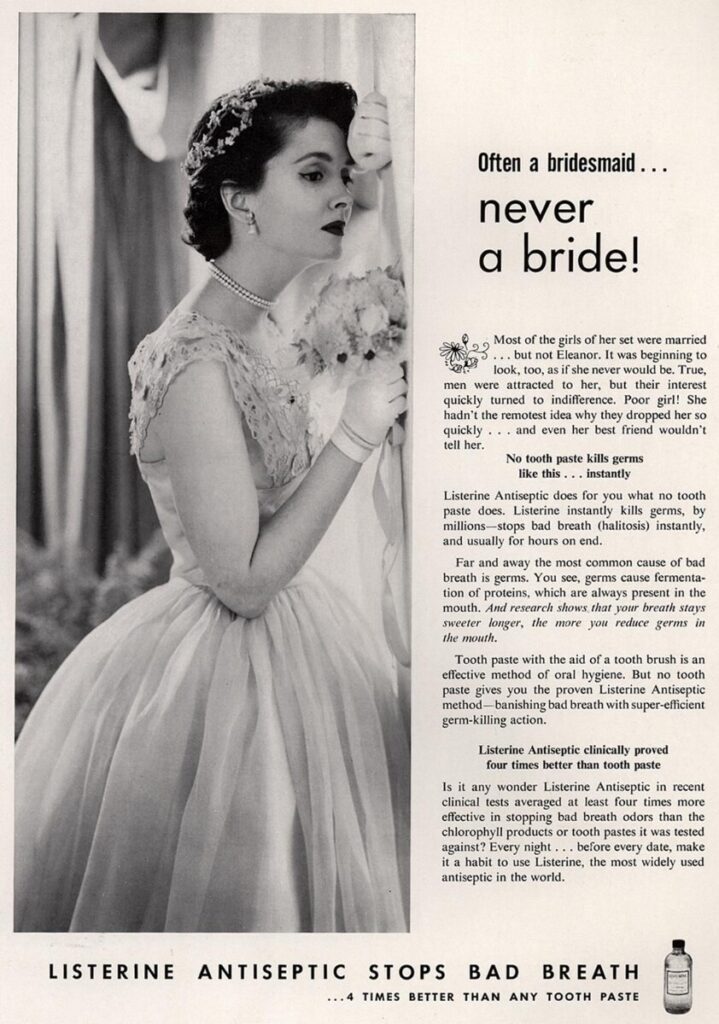
At the other end of the spectrum sits Listerine’s “Often a bridesmaid, never a bride.” It suggested bad breath could quietly cost you love and happiness. It sold millions of bottles, and it remains a textbook example of fear-based advertising pushed to its limit. The lesson isn’t that it was wrong. It’s that the emotional intensity has to match both the problem and the brand.
The examples accompanying this article sit somewhere in the middle.
When we created these ads for Dental Sleep Professionals, we knew sleep apnoea itself wasn’t something to joke about. It’s a genuine health condition with very real consequences.
The treatment, however, was another story.
Many patients disliked wearing a CPAP mask. They talked about the hoses, the bulk and the feeling of sleeping in what looked like science fiction headgear. That frustration became the pain point. Not the condition itself.
That’s why one ad warns, “Don’t Let CPAP Turn You Into a SciFi Villain,” while another promises, “Sleep Apnoea Treatment Without the Space Helmet.”
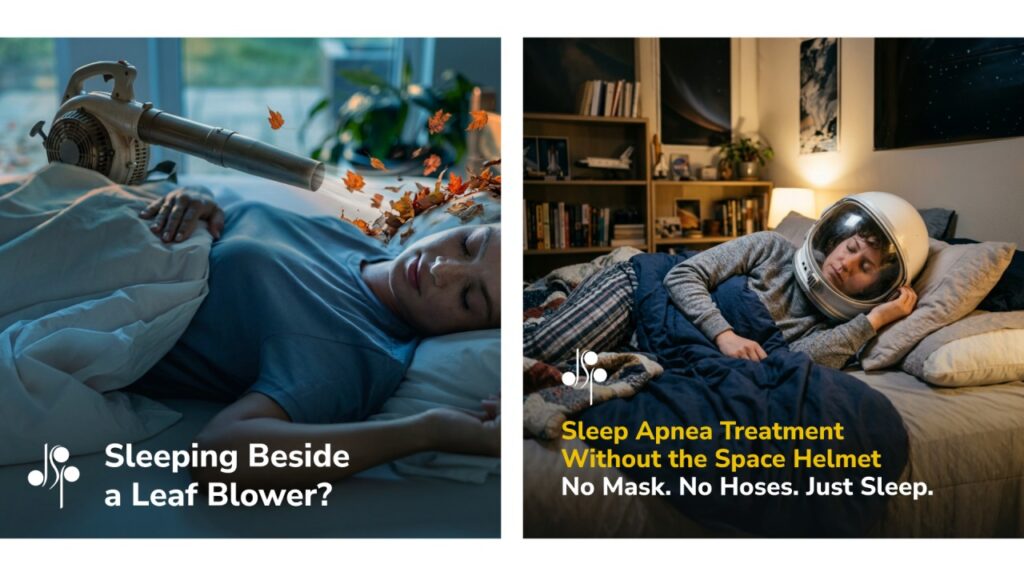
The humour works because it targets an experience patients already recognise. It acknowledges a real frustration without trivialising a serious health issue. The pain point is still there. It’s simply wrapped in a tone that fits the brand.
That’s the nuance.
Pain point messaging isn’t about making people feel worse. It’s about deciding which problem to shine a light on, and how brightly. Sometimes the right move is humour. Sometimes empathy. Sometimes urgency. And sometimes, particularly when emotions are already running high, the most persuasive thing you can do is skip the pain altogether and focus on the possibility of a better outcome.
Why some pain point messaging feels exhausting now
Over the past few years there’s been a noticeable shift in how good marketers talk about this.
More copywriters are questioning whether constant fear, urgency and worst-case scenarios actually build long-term trust. And the effectiveness research backs the instinct. Fear and urgency are activation tools. They can win the click today while quietly costing you the relationship tomorrow. A brand that treats every message like an emergency is borrowing against its own credibility.
There’s also a volume problem, and it’s newer than people realise. The same handful of pain hooks now appear in every feed, often generated at scale, often barely reworded. Saturation has sharpened the audience’s filter. We’ve all seen the LinkedIn ad insisting your business is doomed without one obscure platform, or the subject line claiming your website is secretly costing you millions.
Readers have developed very good nonsense detectors.
But here’s the part most “pain point is dead” takes miss. A lot of this copy doesn’t fail because it uses pain. It fails because it’s aimed at the wrong person.
In his 1966 classic Breakthrough Advertising, Eugene Schwartz mapped the stages a buyer moves through, from completely unaware of the problem to fully aware of your solution. Agitating a pain point is powerful when someone is still problem aware and hasn’t quite admitted the problem to themselves. Run that same agitation at someone who already knows their problem and is actively shopping for a fix, and you’re not persuading them. You’re delaying them. The pain isn’t wrong. The timing is.
That single distinction explains most of the pain point copy that feels exhausting. It’s pointed at people who moved past the problem three steps ago.
The real job of a copywriter
Good copywriting is rarely about inventing pain. It’s about recognising pain that already exists. That sounds like semantics. It changes everything.
Your audience already knows their frustrations. Your job is to prove you understand them, and to meet them at the stage they’re actually at. When people feel understood, they become far more willing to hear your solution. When they feel manipulated, they leave.
Empathy beats exaggeration. Almost every time.
So should you use pain point messaging?
Usually, yes. Just not automatically.
Ask yourself a few questions before you write.
Is this a problem people genuinely experience? Where is this reader in their journey: do they still need the problem named, or are they already hunting for the fix? Does the level of emotion match the seriousness of the problem? Would this still sound respectful if the customer were sitting across the table from you? Could humour make the message more relatable without making light of the audience?
Sometimes the answer is to lean into the pain. Sometimes it’s better to lead with the outcome. Sometimes the smartest move is to acknowledge the problem, smile with your audience, and move on.
Because pain isn’t the point. Connection is.
Pain point messaging still earns its place in the copywriter’s toolkit because it reflects something fundamentally human. We notice friction. We want relief. That psychology is older than advertising itself.
What has changed is the audience.
People have seen every trick. Every countdown timer. Every fear-based headline. Every exaggerated consequence. The brands that stand out now are the ones that remember persuasion and empathy can happily share the same sentence.